
EXISTING HOME RETROFIT
Remove Old Insulation and Make Your Atlanta Home Truly Comfortable
Most Metro Atlanta homes were built before spray foam was widely available. If your home still has the original fiberglass or cellulose insulation from the 1980s, 90s, or even early 2000s — it is no longer doing its job.
THE PROBLEM
Why Your Old Insulation Is Costing You Every Month
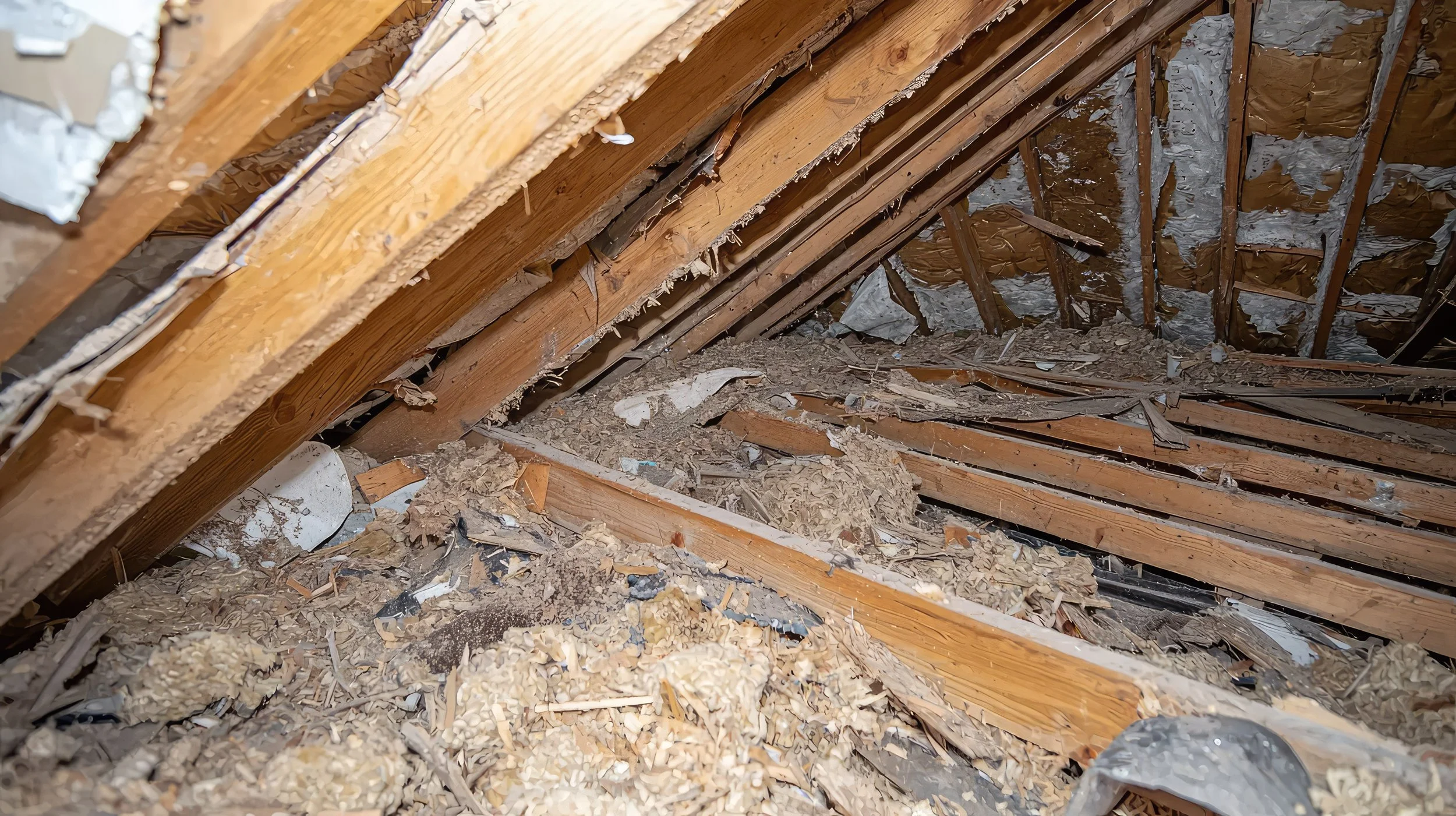
Fiberglass batts and blown-in cellulose were the standard in residential construction for decades — and they work reasonably well when they're first installed. But over 10, 15, or 20 years, a few things happen that your energy bills will notice even if you don't:
It settles and compresses. Blown cellulose and loose fiberglass lose R-value as they compact over time. Insulation installed to R-38 in 1995 may be performing closer to R-22 today. Regardless of R-value fiberglass at its best is only about 34% efficent compared to a 93% efficency for foam products.
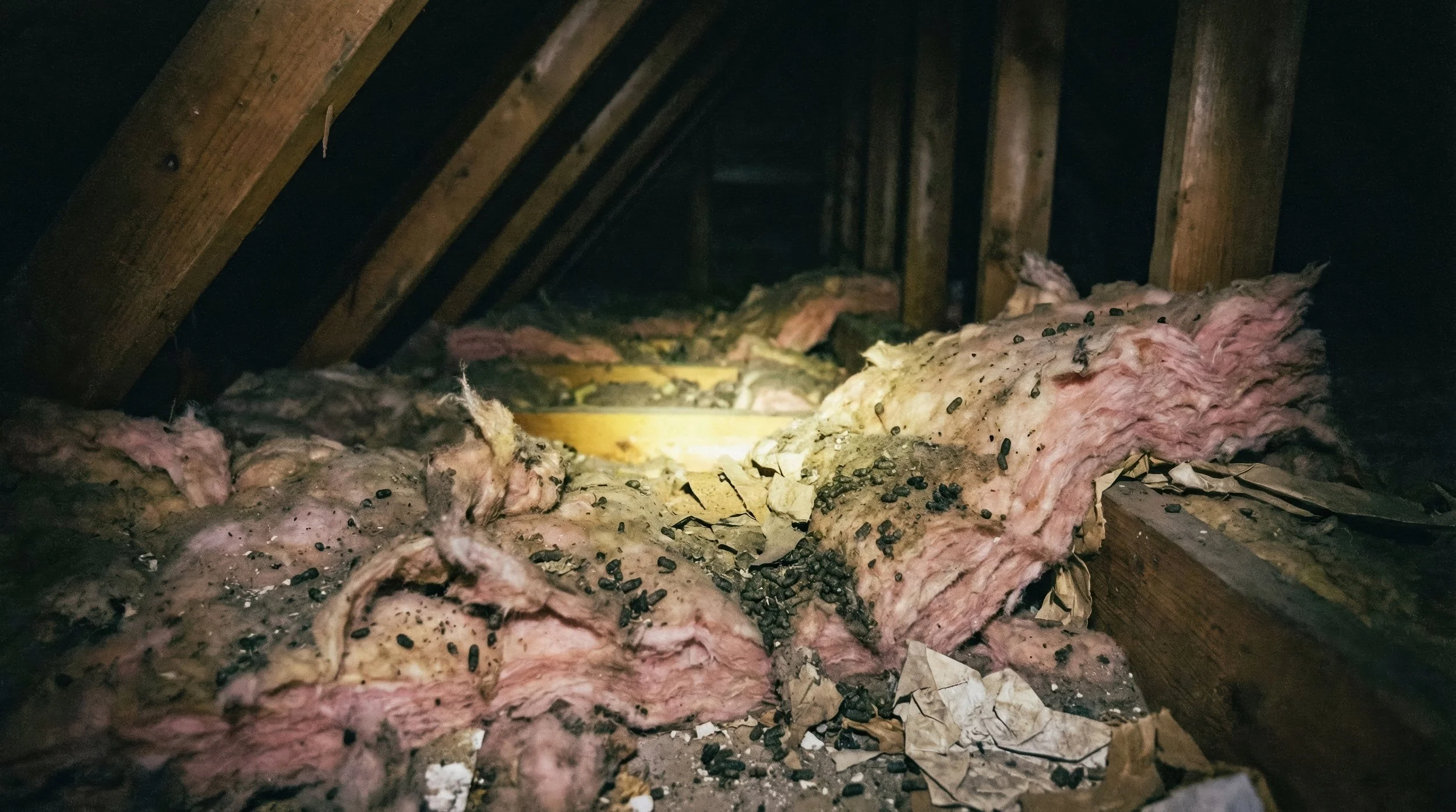
It gets contaminated. Old insulation absorbs moisture, traps dust, pollen, and mold spores, and becomes a nesting ground for rodents and insects. In a humid Georgia climate, this happens faster than most homeowners realize.
It doesn't seal air — it only slows it. This is the most important point. Fiberglass and cellulose are fill materials, not air barriers. Every gap between a joist, every wire penetration, every recessed light fixture in your ceiling is an air leak that old insulation does nothing to stop. According to the U.S. Department of Energy, up to 40% of a home's heating and cooling loss happens through the building envelope — and most of that loss is air infiltration, not thermal conduction.
Your HVAC is working harder than it should be. When conditioned air escapes through a leaky attic, your heating and cooling system runs longer to compensate. That's wear on your equipment and money out of your pocket — every month, every year.
If your home feels stuffy in July, drafty in January, or you have rooms that just never seem to reach the right temperature — this is almost certainly the cause.

THE SOLUTION
The JR Spray Foam Retrofit Process
A proper existing-home retrofit is a two-phase job, and getting Phase 1 right is what makes Phase 2 last for the life of your home. Here's exactly what we do:
THE PROCESS
The 5-Step Retrofit Process.
01.
Free Thermal Camera Inspection
Before we quote a single dollar, we come to your home with a professional thermal imaging camera and walk your attic. You'll see the cold spots, air leaks, and condition of your existing insulation on a screen — not described in a sales brochure. Most audits take 30–45 minutes. No charge, no obligation.
02.
Full Insulation Removal & Vacuum
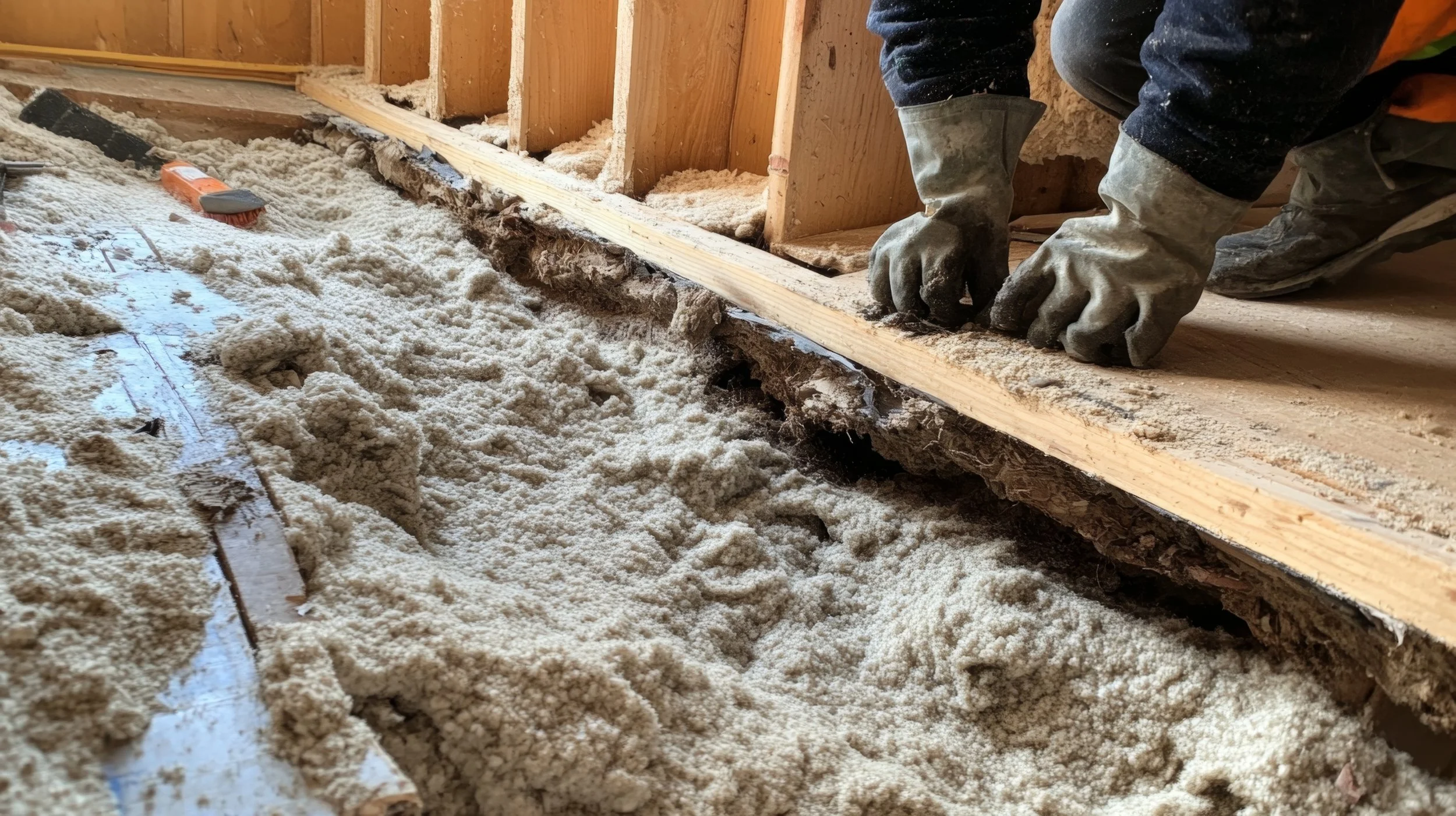
We never spray foam over old insulation. Applying foam on top of degraded or contaminated material traps moisture, mold, and debris permanently. Our commercial vacuum system removes everything, bags it, and hauls it away — leaving your attic clean and ready for the next phase.
03.
Air Sealing — Every Gap, Every Penetration
This is the step most contractors skip. Before any foam goes in, we seal every air infiltration point — recessed lights, plumbing penetrations, top plates, wire chases, attic hatches. Once done, your home's building envelope is truly tight, possibly for the first time since it was built.
04.
Spray Foam Application
We apply closed-cell or open-cell spray foam directly to your roof deck. Closed-cell offers the highest R-value (~R-6.5/inch) and vapor barrier protection — ideal for Georgia's humidity.
Open-cell offers excellent sound dampening at a lower cost. We recommend the right product for your home — no upsell, just an honest fit.
05.
Final Inspection & Walkthrough
When the job's complete, we walk the attic with you (or show photos if you'd rather not go up).
We verify coverage, confirm the seal, and answer questions about what to expect. Most customers notice a difference within the first full heating or cooling cycle — often within days.
RESULTS
What Homeowners Notice After a Retrofit
Every home is different, but here's what our Metro Atlanta customers consistently report after a JR Spray Foam retrofit:
Rooms that were always too hot or too cold now hold temperature more consistently
Energy bills drop much lower in the first full summer or winter after installation
The HVAC system runs noticeably less often thus consuming less electricity @ 220 volts and in turn lower electric bills
Air Sealing reduces the dust and pollen levels that enter your home as well as critters & insects from the attic and crawl space.
Attic storage becomes usable space — no longer extreme heat in summer or cold in winter. Soft items like stored candles no longer melt. Want to make an attic room or finish out a bonus room you now have a much better environment from the get go.
The home feels quieter — spray foam also provides significant sound dampening. Wish to have a home theater or a music practice room installed, foam encapsulation of that area helps eliminate sound from traveling
I no longer smell the odor I was getting through my HVAC ducts. That is because the removal of the old blown in insulation may have had nesting pests, and of course unsanitary waste contained within the burrowed tunnels throughout their little community.
REAL CUSTOMER RESULTS
"Our Energy Bill Dropped Nearly $180 the First Month."
"After 20 years in our Cumming home, we finally addressed the insulation. JR Spray Foam vacuumed out everything and applied spray foam to the roof deck. Best home improvement we've made."
— DAVID M. | CUMMING, GA | ATTIC RETROFIT
Frequently Asked Questions.
-
Most attic retrofit jobs are completed in a single day. The vacuum process creates some noise, but the work is contained to the attic. You do not need to leave your home. We lay down protection in any areas where equipment needs to pass through the living space.
-
Yes — we ask that the attic be cleared of stored items before our crew arrives. We're happy to advise on what needs to move and what can stay.
-
Most customers see a meaningful change within the first full billing cycle after installation. A complete summer or winter season is typically needed to see the full year-round impact.
-
Once cured — typically 24 hours after application — spray foam is completely inert and non-toxic. During application, the attic should not be occupied, and the crew wears appropriate respiratory protection. We provide full safety guidance before every job.
-
Yes. We bag and remove all vacuumed insulation material from your property. You do not need to arrange disposal.
Have more questions? Explore our complete FAQ section.

READY TO FIND OUT?
Ready to Find Out What Your Attic Is Costing You?
Book a free energy audit. We’ll come to your home, show you exactly what’s happening in your attic, and give you an honest quote for a complete retrofit — with no pressure and no obligation.
Or Call or Text us directly: 678-328-0134
We typically schedule energy audits within 1-3 business days and respond to all inquiries within a few hours.