
CRAWL SPACE ENCAPSULATION
Crawl Space Encapsulation for
Metro Atlanta Homes
Musty smells, cold floors, and creeping moisture usually start in one place — your crawl space. We seal it off completely, so it stops affecting the rest of your home.
THE PROBLEM
Your Crawl Space Is Affecting More of Your Home Than You Think
Most homeowners never think about their crawl space — until it starts causing problems they can feel. Here's what's actually happening down there:
It's a major source of the air you breathe. A significant portion of the air circulating through your home originates in the crawl space beneath it. If that space is damp, musty, or contaminated, that air quality problem doesn't stay contained — it moves upward into your living space.
It produces more moisture than you'd expect. An uncovered crawl space can release a surprising amount of water vapor into the air below your home every single day — moisture that has nowhere to go but up into your subfloor.
It's often the real cause of buckling hardwood floors. High humidity in the crawl space is one of the most common — and most overlooked — causes of hardwood flooring problems throughout a home.
Traditional vented crawl spaces rarely work as designed. A vented crawl space is supposed to have a proper vapor barrier over the ground and complete insulation under the subfloor. In practice, we almost never find both done correctly. The ground is rarely fully covered, and the insulation — usually fiberglass — is porous, ineffective at blocking moisture, and often installed poorly or not at all.
Building science research consistently shows that venting a crawl space in a humid climate like Georgia does more harm than good — it introduces warm, moisture-laden outside air that condenses on cooler surfaces, creating the exact conditions mold needs to grow.

THE SOLUTION
Seal It Once, Solve It for Good
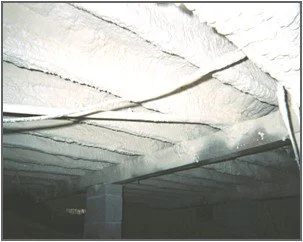
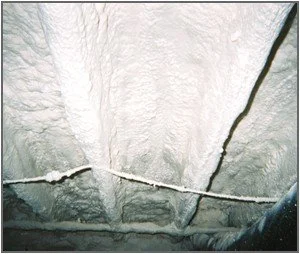
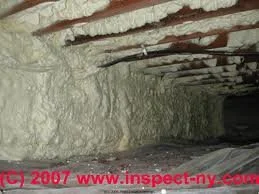
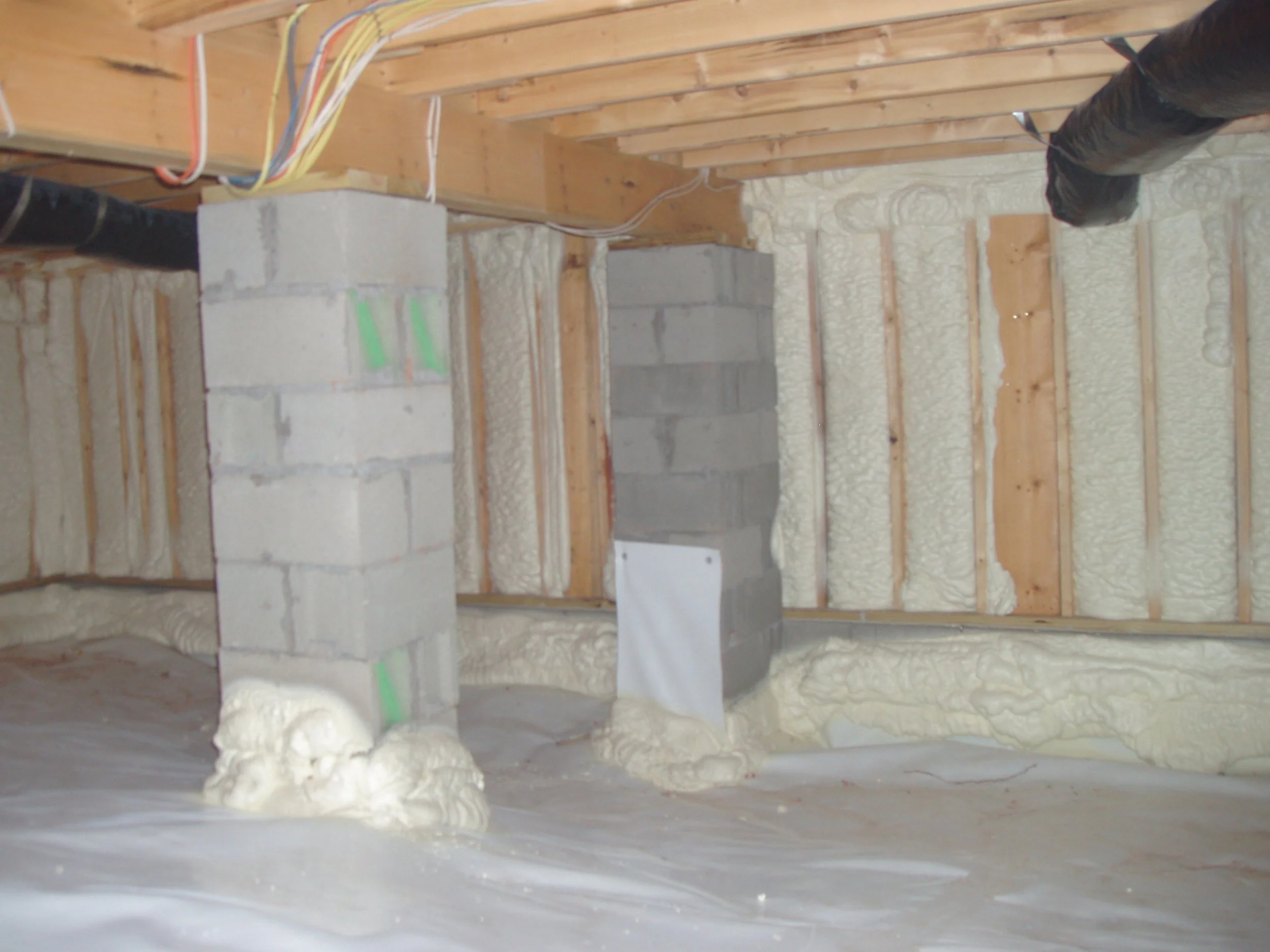
The most effective fix isn't more ventilation — it's sealing your crawl space off from the ground and outside air entirely, then insulating the subfloor with closed-cell spray foam. Once that's done, moisture, temperature swings, and air quality problems stop at the source.
THE PROCESS
The 5-Step Retrofit Process.
01.
Free Thermal Camera Inspection
We assess your crawl space's current condition, moisture levels, and insulation before recommending a solution.
Along with a thermal camera, we use a hygrometer to measure relative humidity and moisture in your crawl space or basement areas giving you real numbers, not just a visual impression. No charge, no obligation.
02.
Remove Old, Ineffective Insulation
If your crawl space already has fiberglass batts, we remove them completely. Fiberglass in a crawl space environment is especially prone to sagging, moisture absorption, and losing whatever effectiveness it started with — it needs to come out, not be built around.
03.
Seal the Crawl Space Envelope
We close off foundation vents and seal the crawl space from outside air and ground moisture, creating a controlled, conditioned space rather than one exposed to the elements.
04.
Apply Closed-Cell Spray Foam to the Subfloor
Closed-cell foam is applied directly to the underside of your subfloor. Because it's its own moisture barrier, it seals out humidity, pests, and temperature swings in a single application — no separate vapor barrier required on the subfloor itself.
05.
Ground Vapor Barrier (as needed)
Depending on your crawl space's condition, we may also recommend a heavy-duty ground vapor barrier to further reduce moisture at the source. We'll walk you through whether your home needs this during your inspection.
WHY IT MATTERS
What Encapsulation Actually Changes
Floors feel warmer in winter and cooler in summer
Musty odors from the crawl space stop reaching your living space
Hardwood floors are far less likely to buckle or warp from humidity
Pests and rodents lose an easy entry point into your home
Indoor air quality improves noticeably
Energy savings of up to 10–20% per year once the crawl space is sealed and insulated
Your subfloor is protected from long-term moisture damage
Sealing the earth dirt under you room above flooring keeps moisture under the plastic membrane and moisture out of your newly encapsulated crawlspace and prevents musty moisture from rising up into your living space.
Frequently Asked Questions.
-
Closed-cell spray foam acts as its own moisture barrier, which reduces how critical a separate ground vapor barrier is. That said, we often still recommend one for added moisture control — we'll advise based on your specific crawl space during inspection.
-
A vented crawl space relies on outside air moving through foundation vents to manage moisture — a system that rarely performs as intended. A sealed (encapsulated) crawl space closes off those vents and controls temperature and humidity directly, which is the more effective, modern approach.
-
In most cases, yes. Musty odors are almost always a moisture and air quality issue, and sealing the crawl space addresses the root cause rather than masking the smell.
-
Yes — if your crawl space has existing fiberglass, we remove it completely before applying closed-cell foam. Foam applied over old, moisture-damaged material won't perform properly.
-
The work is contained entirely to the crawl space itself. You don't need to be present in that area of your home, and most jobs are completed within a day.
-
Alongside the thermal camera, we use a moisture meter on walls and a hygrometer to measure relative humidity in the space. This gives you actual readings — not just a visual impression — so you know exactly what's going on before deciding on encapsulation or insulation.
Have more questions? Explore our complete FAQ section.

READY TO SEAL IT UP?
Ready to Stop the Musty Smell for Good?
Book a free energy audit. We’ll assess your crawl space’s condition and show you exactly what it’ll take to seal it properly — no pressure, no obligation.
Or Call or Text us directly: 678-328-0134
We typically schedule energy audits within 3-5 business days and respond to all inquiries within a few hours.