
BASEMENT INSULATION
Basement Insulation for Metro Atlanta Homes
Cold walls, musty smells, and wasted space, most basements never reach their potential because they were never properly insulated. Spray foam changes that.
THE PROBLEM
Why Basements Stay Cold, Damp, and Unused
Basements have a different challenge than attics or crawl spaces — they're surrounded by earth on most sides, which creates conditions traditional insulation was never designed to handle.
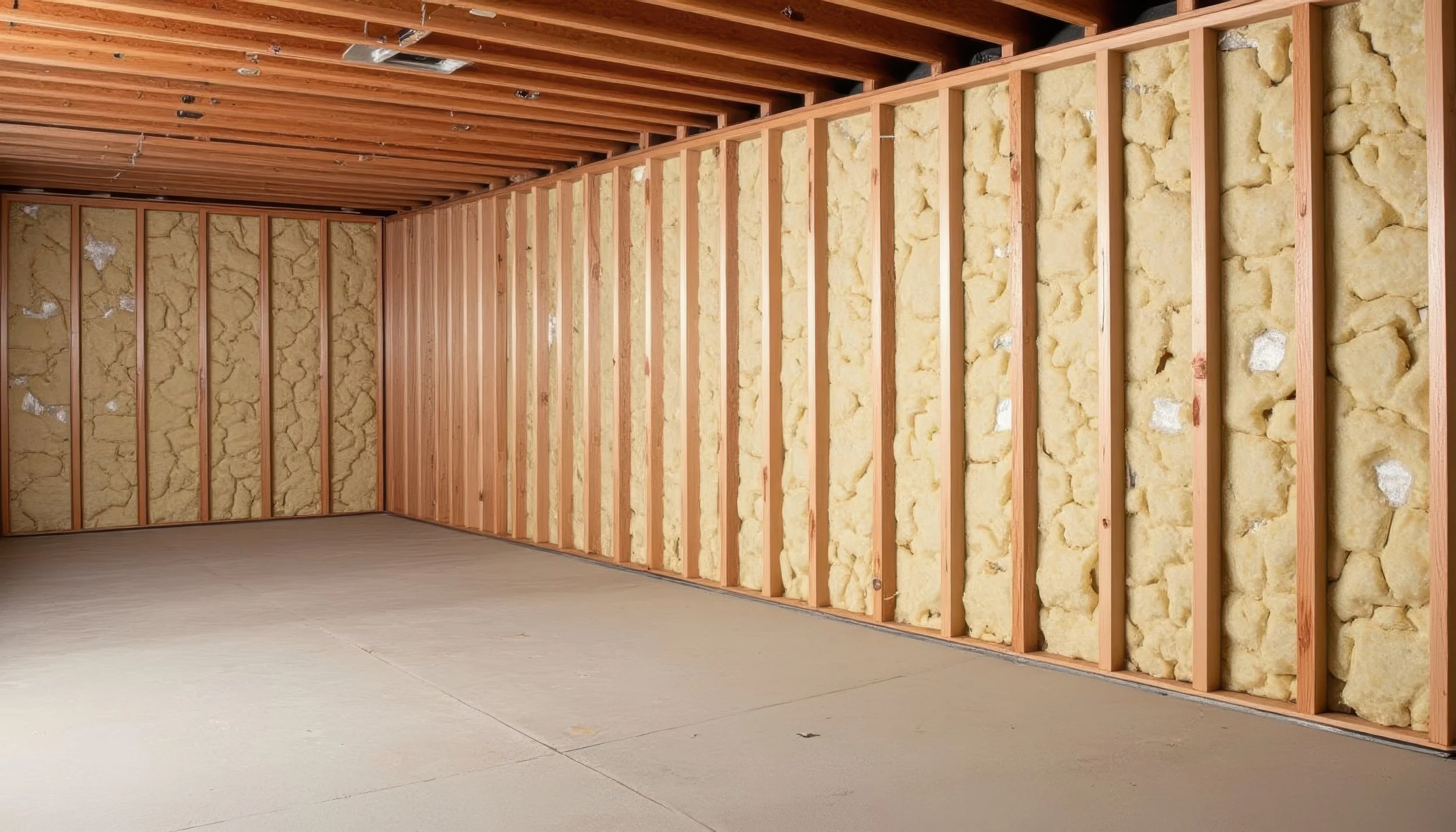
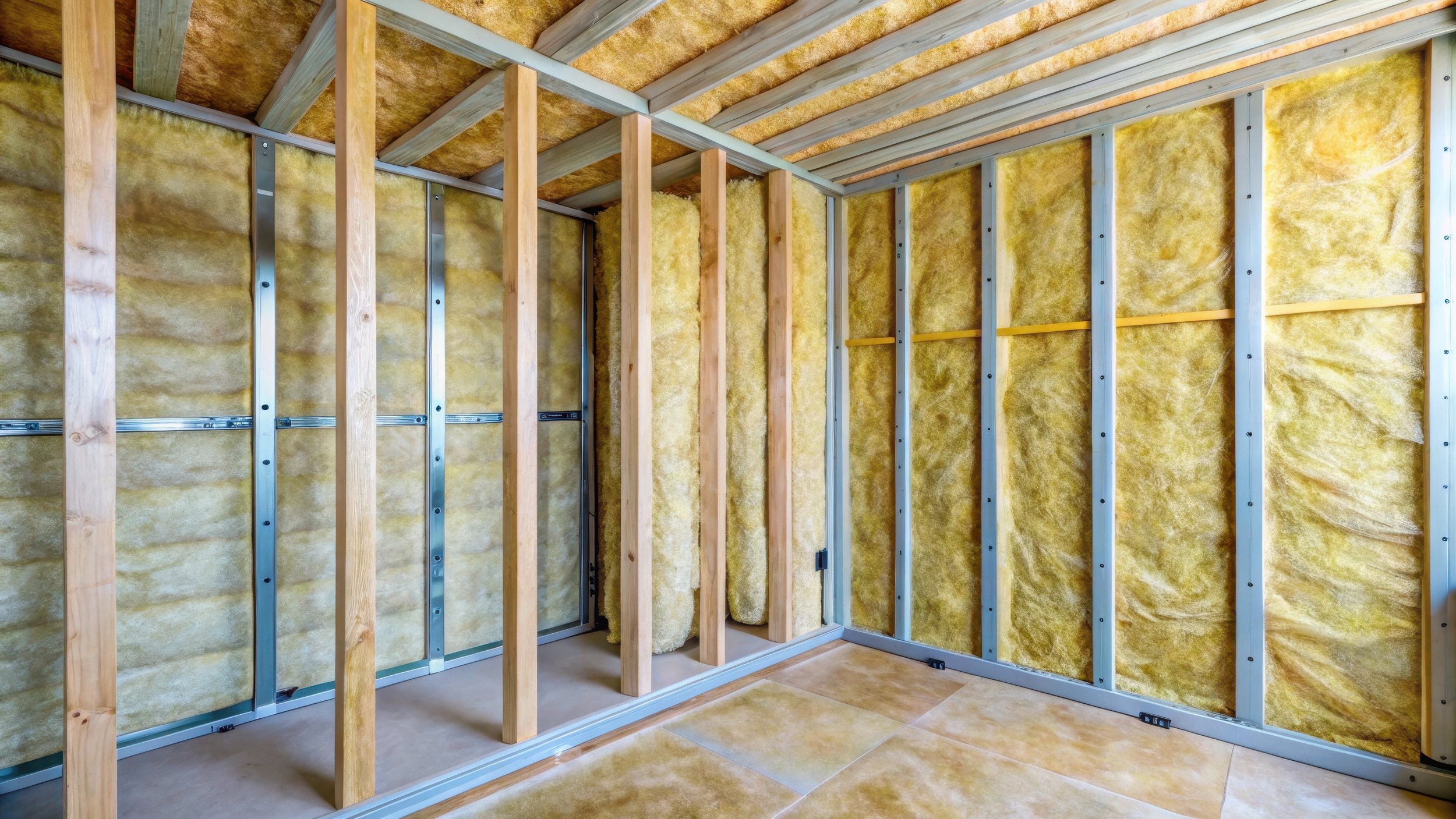
Basement walls are in constant contact with the ground. Unlike an above-grade wall, a basement wall is exposed to soil temperature and moisture year-round. Fiberglass batts, which rely on trapped air for their R-value, perform poorly against a cold, damp masonry or concrete surface — and can actually trap moisture against the wall, making the problem worse.
Condensation is a common, often invisible problem. When warm, humid air inside the basement meets a cold foundation wall, condensation forms — creating the conditions for mold, mildew, and musty odors, often behind walls or storage where you won't notice until the smell shows up upstairs.
An uninsulated basement drags down the comfort of your whole home. Even if you don't spend much time down there, an unconditioned basement affects the temperature and humidity of the floors above it — especially if ductwork or utilities run through the space.
Most basements are treated as storage, not livable space — because they've never been comfortable enough to be anything else.

THE SOLUTION
Seal It, Insulate It, Reclaim the Space
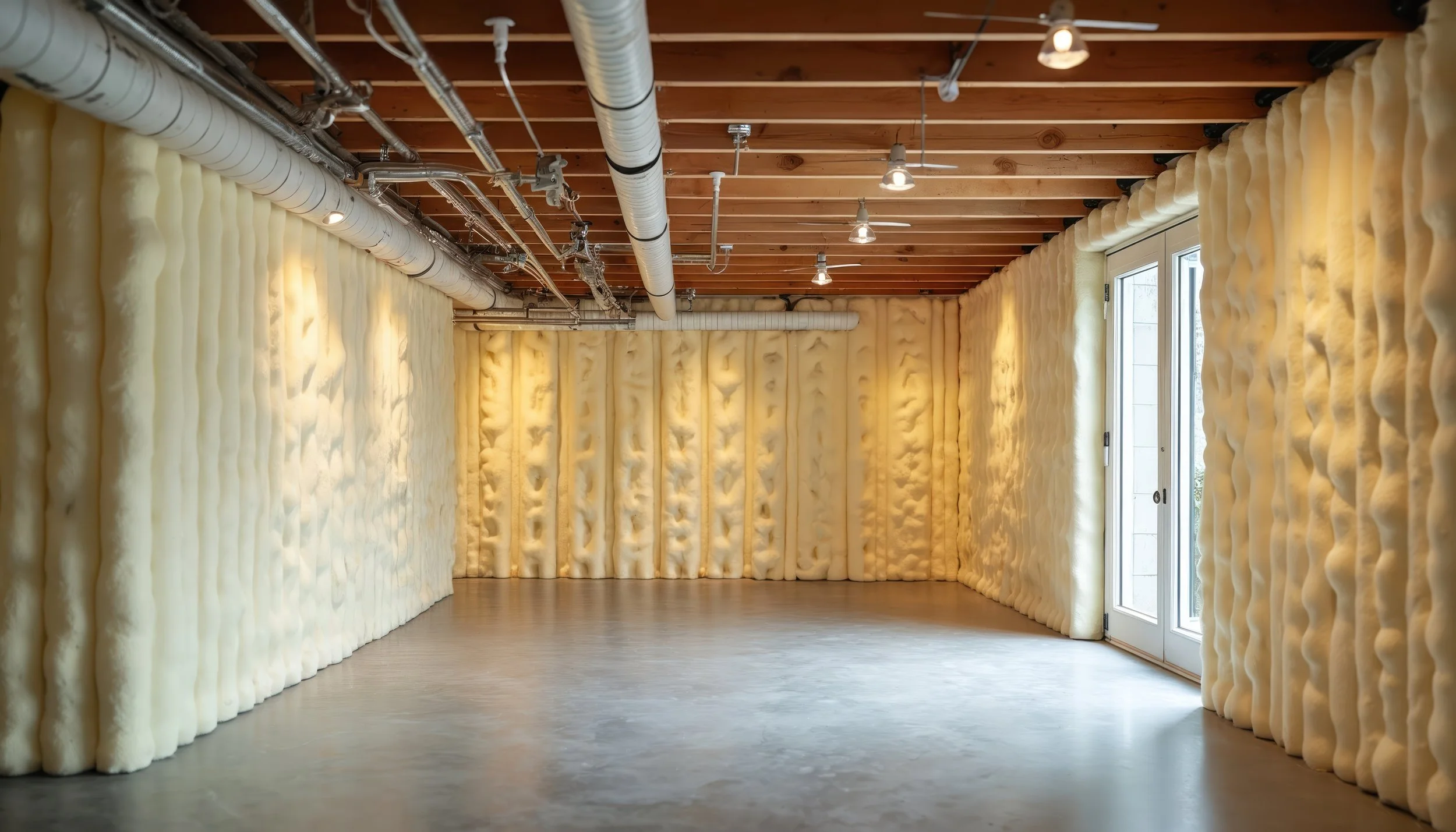
Closed-cell spray foam is applied directly to basement walls, creating both an insulation layer and a moisture barrier in a single step — solving the two problems that make basements uncomfortable at the same time.
01.
Free Thermal Camera Inspection
Alongside the thermal camera, we use a moisture meter on walls and a hygrometer to measure relative humidity in the space. This gives you actual readings — not just a visual impression — so you know exactly what's going on before deciding on encapsulation or insulation.
THE PROCESS
The 5-Step Retrofit Process.
02.
Remove Old or Damaged Materials
If your basement has existing fiberglass or damaged materials against the walls, we remove them completely — old, moisture-affected insulation or leaking foundations should never be sprayed over.
03.
Address Moisture Sources First
Before any foam is applied, we identify and address active moisture issues — this may include minor sealing or recommending further evaluation by a foundation specialist if there's a larger water intrusion problem outside the scope of insulation work.
04.Apply Closed-Cell Spray Foam to the Walls
Closed-cell foam is sprayed directly onto basement walls, bonding tightly and creating a continuous insulation and vapor barrier in one application — no separate plastic sheeting required behind it.
05.
Final Walkthrough
We walk the finished space with you, explain what to expect as the basement's temperature and humidity stabilize, and answer any questions about next steps if you're planning to finish the space further.
WHY IT MATTERS
What Basement Insulation Actually Changes
Basement walls no longer feel cold or damp to the touch
Musty odors caused by condensation are addressed at the source
The space becomes genuinely usable — storage, a home gym, a workshop, or a future finished room
Upstairs floors feel more consistent in temperature
Reduced risk of mold and mildew from trapped moisture
Frequently Asked Questions.
-
Yes. Closed-cell spray foam bonds well to concrete, cinder block, and most standard basement wall surfaces.
-
In most cases, yes — if the smell is caused by condensation and moisture against the walls, sealing and insulating addresses the root cause rather than masking it. If there's active water intrusion (standing water, visible leaks), that needs to be addressed separately first.
-
If your basement has old fiberglass or damaged material against the walls, yes, depending on what it is — we remove it first, or inform you of what has to be done first, since foam applied over compromised material won't perform properly.
-
Yes — an uninsulated basement affects the comfort and energy efficiency of the floors above it, even if you rarely go downstairs yourself.
-
Yes, and insulating first is the right order of operations — it's much easier to spray foam an open basement wall than one that's already framed and finished.
-
Alongside the thermal camera, we use a moisture meter on walls and a hygrometer to measure relative humidity in the space. This gives you actual readings — not just a visual impression — so you know exactly what's going on before deciding on encapsulation or insulation.
This keeps the addition proportionate — real and specific where it's relevant, without cluttering the universal audit page or requiring a whole new page for two tools used in two specific contexts. Want me to also flag this as a talking point for George's onboarding once he starts doing site visits, since you mentioned wanting him to adopt the same practice?
Have more questions? Explore our complete FAQ section.

Book a free energy audit. We’ll assess your basement’s condition and show you what it’ll take to make it comfortable — no pressure, no obligation.
Or Call or Text us directly: 678-328-0134
We typically schedule energy audits within 3-5 business days and respond to all inquiries within a few hours.